Recipes & Tips

18/10 Stainless Steel Saucepan: The Complete Guide to Choosing (and Cooking Healthily)
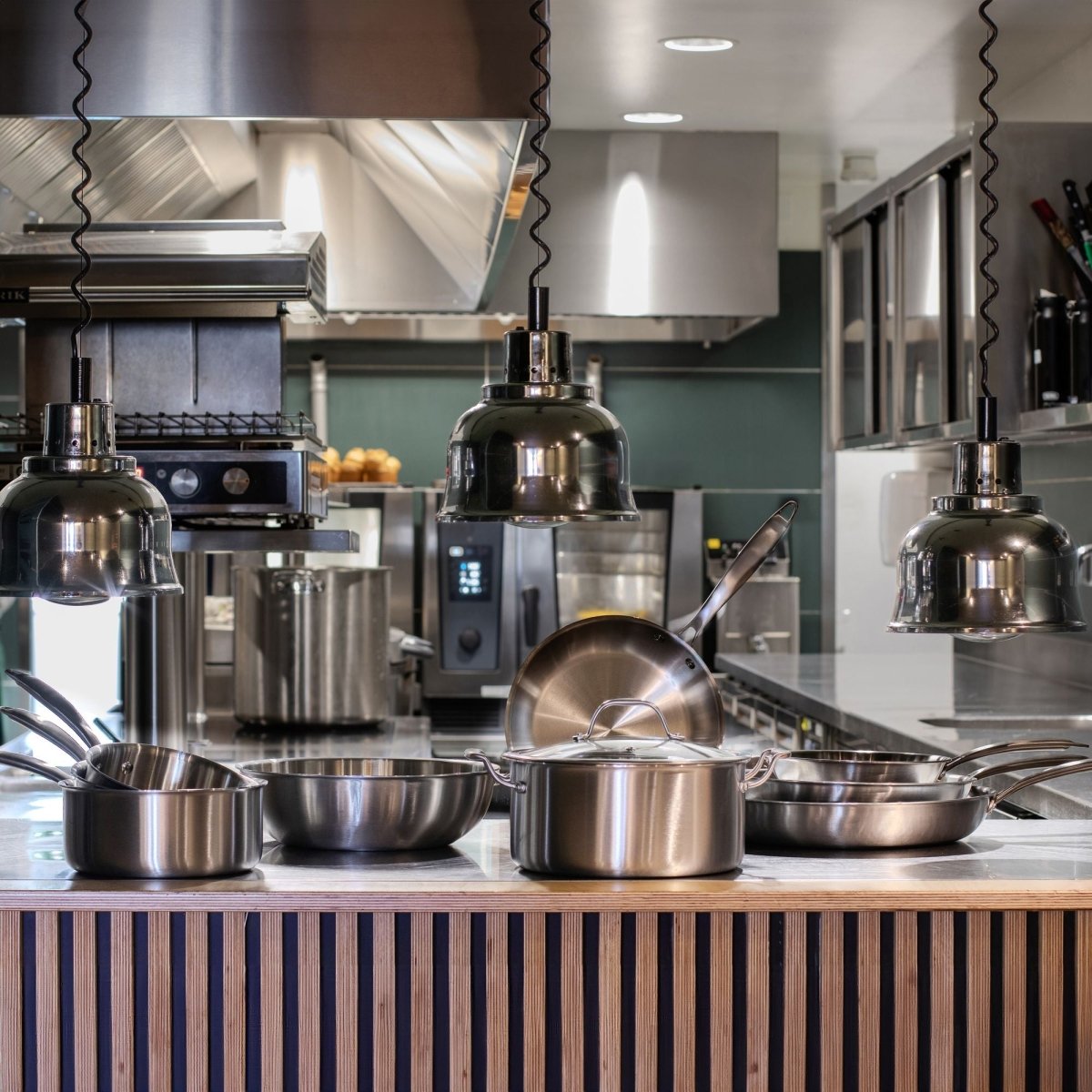
Hesitating to invest in an 18/10 stainless steel pot? You're right to ask questions. Behind these mysterious numbers lies one of the most efficient and healthiest materials for everyday cooking. No more dubious non-stick coatings that chip after six months: 18/10 stainless steel lasts for decades without flinching. But beware, not all stainless steel pots are created equal. Thickness, structure, finishes, manufacturing… there are many technical criteria that determine the final quality. In this complete guide, we'll break down what you really need to know before buying, how to cook with it properly, and why this choice is one of the smartest for your health and your wallet.What does "18/10 stainless steel" really mean?The numbers 18/10 are not just marketing: they precisely indicate the composition of the stainless steel used. The first number (18) corresponds to the percentage of chromium, and the second (10) to the percentage of nickel contained in the alloy. The rest, about 72%, is mainly composed of iron.This composition is significant. Chromium forms an invisible passive layer on the metal's surface that protects it from corrosion and oxidation. Nickel, for its part, provides shine, resistance to thermal shock, and significantly improves durability. It is this combination that makes 18/10 stainless steel a "premium food-grade quality" material.For comparison, you can also find 18/8 stainless steel (slightly less nickel, slightly less resistant) or 18/0 stainless steel (no nickel, magnetic but more susceptible to corrosion). 18/10 stainless steel remains the benchmark for high-end kitchen utensils, especially those used in professional catering.Why choose an 18/10 stainless steel pot over something else?The first argument is health. Unlike traditional non-stick pans, 18/10 stainless steel contains no PFAS, PFOA, or Teflon. No chemical particles migrate into your food, even at high temperatures, even when you scrape the bottom. For families concerned about their diet, this is a decisive argument.The second advantage is durability. A quality 18/10 stainless steel pot can last 20, 30, or even 50 years. It can be passed down. It doesn't deform, doesn't scratch deeply, and doesn't lose its properties.Finally, stainless steel offers unmatched versatility: Compatible with all heat sources, including induction (depending on the base) Oven-safe without problems Tolerates metal utensils Dishwasher-safe Perfectly preserves flavors (stainless steel is neutral) If you're outfitting your kitchen, taking a look at our collection of 18/10 stainless steel pots is an excellent starting point to understand the different formats available.Thickness and structure: the true quality criteriaHere's the classic trap: two pots can both be "18/10 stainless steel" and offer radically different performance. Why? Because of the base structure and wall thickness.Single-layer vs. multi-layer baseStainless steel alone is a poor heat conductor. A basic stainless steel pot heats slowly and unevenly, with hot spots that cause food to stick. Serious manufacturers overcome this problem with a sandwich base that incorporates one or more layers of aluminum or copper between two sheets of stainless steel.Triply technology: the ultimateEven better: Triply (or tri-ply) construction where the three metallic layers run not only on the base but also up the entire height of the walls. The result: perfectly even heat distribution, no more hot spots, and reactivity comparable to copper. This is exactly the principle of our Triply Made in France range, manufactured in our French workshops using centuries of expertise.In practice, aim for a total base thickness of at least 4 to 5 mm. Below that, be wary.How to cook well with an 18/10 stainless steel potThe classic objection against stainless steel: "it sticks." That's true… if you don't know how to use it. With the right technique, 18/10 stainless steel becomes almost naturally non-stick.The golden rule: heat the pot BEFORE adding fat, and add food only when the oil is hot. Specifically: Place the empty pot on medium heat for 1 to 2 minutes Perform the water drop test: pour a few drops. If they roll into beads without evaporating immediately, the temperature is perfect (Leidenfrost effect) Add the oil, then the food Don't move the meat right away: it will release itself when the crust has formed Another tip: never salt cold water in an empty stainless steel pot; concentrated salt can pit the bottom and create micro-craters. Salt when the water boils.Finally, avoid thermal shocks: never plunge a hot pot into cold water, as you risk deforming the base and losing the flatness essential for induction cooking.Maintenance: making your stainless steel pot last 50 yearsMaintaining an 18/10 stainless steel pot is simple, but a few good practices can keep it looking new for decades.Daily: hot water, dish soap, classic sponge. That's all. Dishwashers are allowed, but over time, they can slightly dull the shine.For stuck-on food: soak with hot water and a little baking soda for 15 minutes. Everything will detach without scrubbing.For limescale marks or bluish iridescence (which sometimes appear after strong heating): a little warm white vinegar on a cloth, and the shine returns instantly.Absolutely avoid: abrasive metal sponges (unless special stainless steel), bleach, and chlorinated products that attack the passive chromium layer.To refresh a slightly tired pot, there are specific stainless steel polishes that work wonders. A good 18/10 stainless steel pot, properly maintained, stays like new for a lifetime.Made in France: why it changes everythingThe country of manufacture is not just a matter of patriotism. It directly determines the final quality of the product. A pot made in France meets strict European standards for food contact materials, traceability, and production conditions.At Menastyl, we have been manufacturing in our French workshops since 1975. Our Triply range is entirely produced in France, using 18/10 stainless steel of European origin, with individual quality control. Concretely, this means: Total traceability of raw materials No PFAS, no eternal pollutants Preserved metallurgical know-how Reduced carbon footprint (no transcontinental transport) Direct support for French industrial employment The price difference with a low-end imported stainless steel pot pays for itself in just a few years, knowing that the lifespan is multiplied tenfold.ConclusionInvesting in a quality 18/10 stainless steel pot means choosing healthier, more durable, and ultimately more economical cooking in the long run. No coating to replace every two years, no chemicals in your dishes, and the possibility of passing it down to future generations.To equip your kitchen with the best, discover Menastyl's Triply Made in France range: a three-layer 18/10 stainless steel made in our workshops, without PFAS, guaranteed for life. And to complete your cookware set, take a look at our stainless steel frying pans that follow the same high standards. Cooking healthily, sustainably, and with pleasure is possible — and it starts with choosing the right utensil.
Learn more